
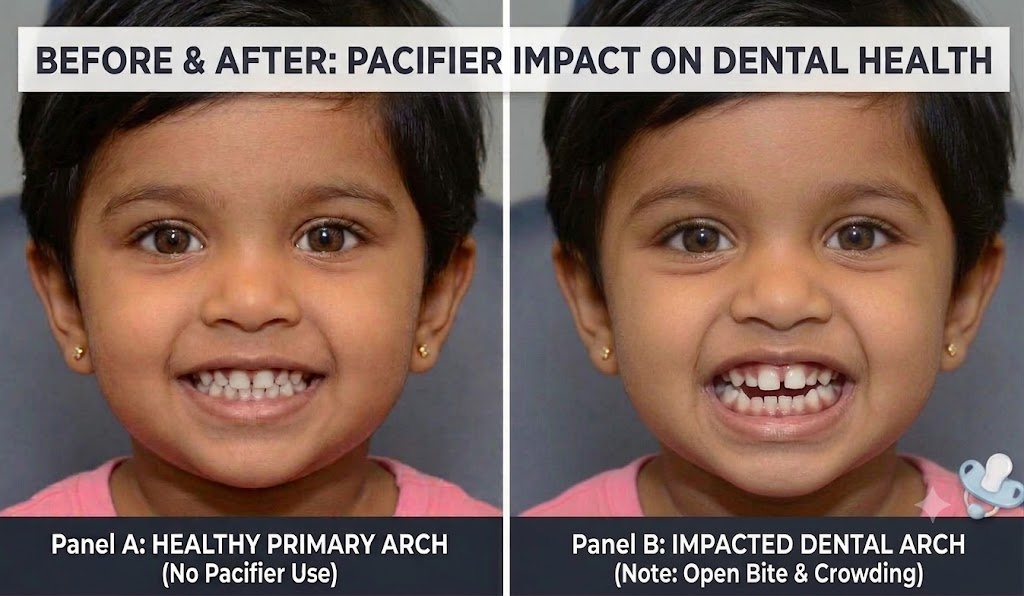
What Are Pacifier Teeth?
Pacifier teeth are changes in a child’s teeth and mouth shape caused by long-term pacifier use. Many parents worry about pacifier teeth in toddlers. This condition can affect how teeth grow and line up. Sometimes, it changes the roof of the mouth too. Early signs may be hard to spot, but knowing what to look for helps prevent problems. According to the American Dental Association, using a pacifier for too long can lead to dental issues from pacifiers.
Causes of Pacifier Teeth
Pacifier teeth develop when a child uses a pacifier for many hours each day, especially after age two. The pressure from sucking can move teeth out of place. Over time, this may change the shape of the mouth. Not all children are affected the same way. However, the risk increases with frequent and long-term use. Genetics and how hard a child sucks may also play a role. The effects of pacifier use on teeth are more likely if the habit continues past toddler years.
Symptoms and Signs
It is important to watch for early signs of pacifier teeth in toddlers. Some common symptoms include:
Sometimes, you may notice changes in your child’s smile. If you see any of these signs, consider talking to a dentist.
Diagnosis
A dentist can diagnose pacifier teeth during a regular dental checkup. First, the dentist will look at your child’s teeth and mouth. Next, they may ask about your child’s pacifier use. Sometimes, X-rays help show how teeth and jaws are growing. Early diagnosis is important. It can help prevent more serious dental issues from pacifiers later on.
Treatment Options
Treatment depends on your child’s age and how much the teeth have shifted. In many cases, stopping pacifier use early can let teeth move back on their own. However, if changes are severe, a dentist may suggest:
For mild cases, no treatment may be needed if the habit stops soon. But, regular dental visits are important to track progress.
Prevention Tips
Preventing dental issues from pacifiers is possible with a few simple steps. Here are some tips:
With early action, you can help prevent pacifier teeth in toddlers.
Lifestyle and Home Care Guidance
At home, you can support your child’s dental health in many ways. For example, praise your child when they go without a pacifier. You can also set up a reward system for pacifier-free days. If your child is upset, try soothing them with hugs or stories instead. In addition, keep up with daily brushing and healthy snacks. Good oral care helps reduce the effects of pacifier use on teeth.
When to See a Dentist
It is wise to visit a dentist if you notice any changes in your child’s teeth or bite. Also, see a dentist if your child still uses a pacifier after age three. Early dental visits can catch problems before they get worse. Dentists can give advice on preventing dental issues from pacifiers and help you make a plan to stop the habit.
In summary, pacifier teeth can be prevented with early action and good habits. Consult a dentist at Cure32 Dental Clinic and Implant Centre for personalized advice on pacifier use and your child’s dental health.