Introduction
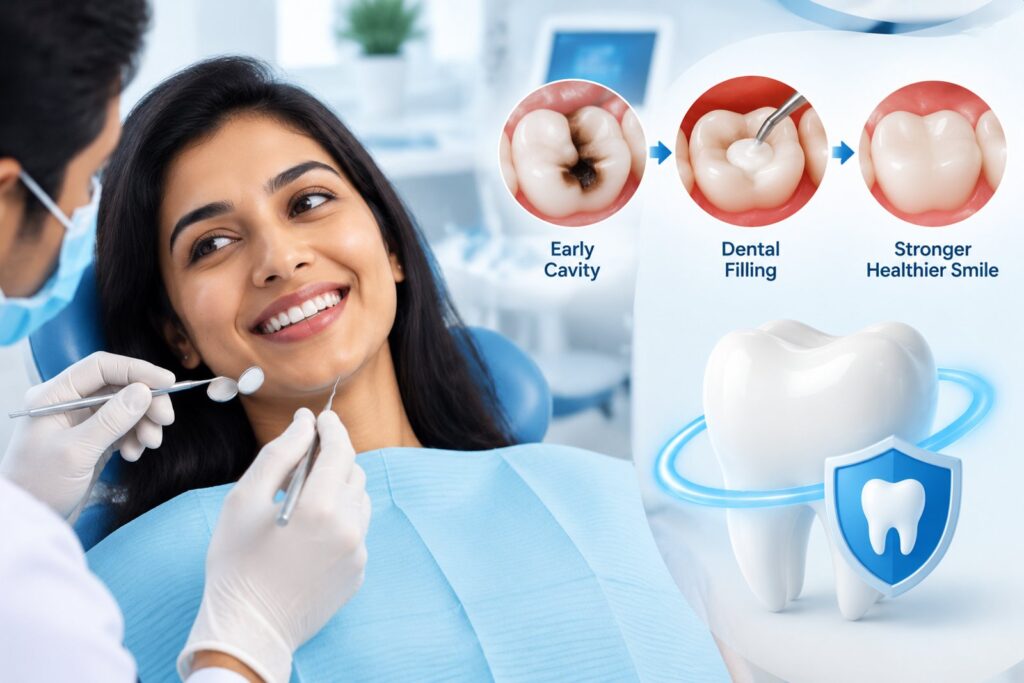
Dental fillings are a common way to fix teeth that have been damaged by cavities or decay. When you get dental fillings early, you can stop the damage from getting worse. In fact, acting quickly helps save your tooth and keeps your mouth healthy. Dental fillings are a key part of tooth restoration and cavity treatment. They help you avoid pain and bigger dental problems later. Let’s explore why dental fillings matter and how they can protect your smile.
What Are Dental Fillings?
Dental fillings are special materials used by dentists to repair teeth. When a tooth has a cavity, the dentist removes the decayed part. After that, they fill the empty space with a dental filling. This process restores the tooth’s shape and strength. As a result, you can chew and smile without worry. Dental fillings also help stop bacteria from entering the tooth again. So, they are important for long-term dental health.
Signs You May Need a Dental Filling
Sometimes, it is hard to know if you need a dental filling. However, there are some signs to watch for. If you notice any of these, you should see your dentist soon:
Even if you do not feel pain, regular dental check-ups can catch problems early. This way, you can get a dental filling before the damage gets worse.
Causes of Tooth Damage Requiring Fillings
Many things can cause tooth damage that needs a filling. Most often, cavities are the main reason. Cavities happen when bacteria in your mouth make acids that eat away at your tooth. Over time, this creates holes or weak spots. Other causes include:
Because these problems can get worse, early treatment with dental fillings is important. According to the CDC, untreated cavities can lead to pain, infection, and even tooth loss.
The Dental Filling Procedure: Step-by-Step
Many people feel nervous about getting a dental filling. However, the process is simple and usually painless. Here is what you can expect during a typical dental filling procedure:
Most fillings take less than an hour. You can usually return to normal activities right after your visit.
Types of Dental Fillings: Pros and Cons
There are several types of dental fillings. Each has its own benefits and drawbacks. Your dentist will help you choose the best one for your needs. Here are the most common types:
Because every mouth is different, your dentist will suggest the best option for you.
Aftercare and Recovery Tips
After getting a dental filling, you may feel numb for a few hours. However, most people can eat and drink soon after. To help your filling last, follow these tips:
With good care, dental fillings can last many years. Regular dental visits help keep your teeth healthy and spot any problems early.
Preventing Tooth Damage: Simple Daily Habits
Preventing cavities and tooth damage is easier than you think. By making a few changes, you can protect your teeth and avoid the need for dental fillings. Try these daily habits:
Because prevention is key, these habits can help you keep your smile healthy for life.
Conclusion
Dental fillings are a safe and effective way to restore teeth before damage gets worse. Early treatment can save you pain, money, and time. If you notice any signs of tooth decay or damage, do not wait. Consult your dentist at Cure32 Dental Clinic and Implant Centre promptly for personalized advice and to prevent further tooth damage.