Many people wonder about dental crowns vs bridges when looking for dental restoration options. Both crowns and bridges help restore your smile and improve chewing. However, they serve different needs. Dental crowns cover and protect a damaged tooth. In contrast, dental bridges fill a gap left by one or more missing teeth. Understanding the difference between dental crowns and bridges can help you make the right choice for your dental health.
What Are Dental Crowns?
Dental crowns are tooth-shaped caps. Dentists place them over weak or damaged teeth. For example, if you have a cracked or badly decayed tooth, a crown can help. Crowns restore the tooth’s shape, size, and strength. They also improve how your tooth looks.
According to the American Dental Association (ADA), crowns are a trusted way to save teeth that might otherwise be lost.
What Are Dental Bridges?
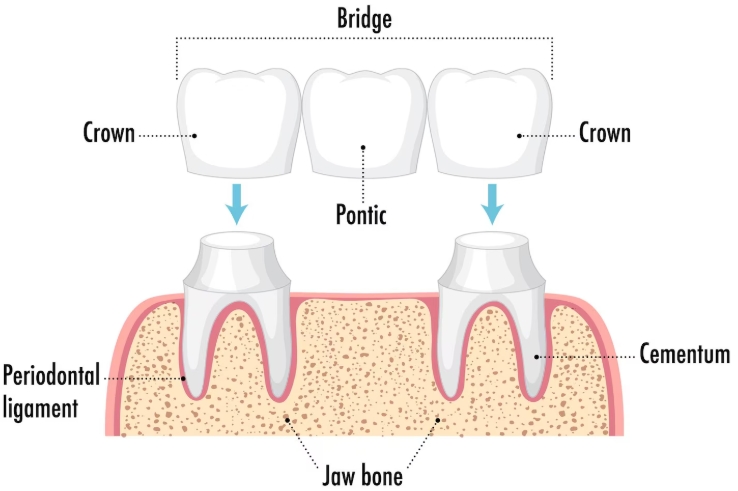
Dental bridges replace one or more missing teeth. A bridge uses the teeth next to the gap for support. These teeth, called abutments, get crowns. The false tooth, called a pontic, sits in the gap. As a result, bridges help restore your bite and keep your other teeth in place.
The ADA notes that bridges are a common dental restoration option for missing teeth.
Key Differences Between Crowns and Bridges
While both crowns and bridges restore teeth, they do so in different ways. Understanding these differences can help you decide which is better, crown or bridge, for your needs.
For many, the choice depends on the dental issue and the location of the problem.
When to Choose a Crown or a Bridge
Sometimes, your dentist will suggest a crown. Other times, a bridge may be better. Knowing when to choose each helps you make an informed decision.
However, your dentist will check your mouth and discuss the best dental restoration option for you.
Procedure Overview for Crowns and Bridges
Getting a crown or bridge usually takes two visits. During the first visit, your dentist prepares the tooth or teeth. Next, they take a mold or digital scan. Then, a dental lab makes the crown or bridge.
Afterward, you can eat and speak normally once the area heals.
Benefits and Risks of Each Option
Both dental crowns and bridges offer many benefits. Yet, each also has some risks. Knowing these can help you decide which is better, crown or bridge, for your needs.
The CDC suggests regular dental check-ups to catch any problems early.
Care and Maintenance Tips
Proper care helps crowns and bridges last longer. With good habits, you can keep your dental restoration in top shape.
In addition, healthy eating and not smoking can help protect your dental work.
Cost Considerations
Cost is an important factor when choosing between dental crowns and bridges. Prices can vary based on material, location, and insurance.
While the upfront cost may seem high, both crowns and bridges can save money by preventing bigger dental problems later.
Schedule your appointment and get the right care at the right time at Cure32 Dental Clinic and Implant Centre